Mercy Among the Children by David Adams Richards (book review)

February 3rd, 2011 by monnibo

Mercy Among the Children by David Adams RichardsI was having difficulty putting my thoughts and feelings into words when it comes to Mercy Among the Children by David Adams Richards. It’s a darkly depressing book but weaves a tale that really makes you feel compassionate towards the characters, even if you want to hate them.

As a boy, Sydney Henderson thinks he has killed Connie Devlin when he pushes him from a roof for stealing his sandwich. He vows to God he will never again harm another if Connie survives. Connie walks away, laughing, and Sydney embarks upon a life of self-immolating goodness.

In spite of having educated himself with such classics as Tolstoy and Marcus Aurelius, he is not taken seriously enough to enter university because of his background of dire poverty and abuse, which leads everyone to expect the worst of him. His saintly generosity of spirit is treated with suspicion and contempt, especially when he manages to win the love of beautiful Elly.

Unwilling to harm another in thought or deed, or to defend himself against false accusations, he is exploited and tormented by others in this rural community, and finally implicated in the death of a 19-year-old boy.

Lyle Henderson knows his father is innocent, but is angry that the family has been ridiculed for years, and that his mother and sister suffer for it. He feels betrayed by his father’s passivity in the face of one blow after another, and unable to accept his belief in long-term salvation.

Unlike his father, he cannot believe that evil will be punished in the end. While his father turns the other cheek, Lyle decides the right way is in fighting, and embarks on a morally empty life of stealing, drinking and violence.

From the publisher, Anchor Canada (a division of Random House)

Read the rest of this entry »

Bookmark and Share

Category: Books, Reviews | No Comments »

The Best Laid Plans by Terry Fallis (book review)

January 22nd, 2011 by monnibo

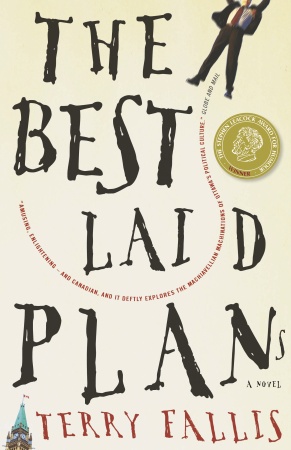
The Best Laid Plans by Terry FallisI will admit I was a bit apprehensive about this book initially because I am not well-versed in politics — nor do I want to be.

However, Terry Fallis managed to make the political observations, proceedings, and commentary manageable enough for the regular reader. And I must say, I did enjoy his wry humour.

A burnt-out politcal aide quits just before an election — but is forced to run a hopeless campaign on the way out. He makes a deal with a crusty old Scot, Angus McLintock — an engineering professor who will do anything, anything, to avoid teaching English to engineers — to let his name stand in the election. No need to campaign, certain to lose, and so on.

Then a great scandal blows away his opponent, and to their horror, Angus is elected. He decides to see what good an honest M.P. who doesn’t care about being re-elected can do in Parliament. The results are hilarious — and with chess, a hovercraft, and the love of a good woman thrown in, this very funny book has something for everyone.

From the publisher, McClelland & Stewart*

I have to say that I really enjoyed the main characters, Daniel and Angus, but I felt like Angus’ diary entries were a cheeky way of getting his point of view across. I can see how this may have worked as a podcast (see footnote) if you’re using different voices, but in print it seems a bit off. However, once I got into the book and characters, it stopped bothering me.

My favourite part was when Daniel saw his girlfriend having relations with their boss and regressed into Parliamentary Procedure terminology to describe the scene. I’ve been in groups twice now where it’s been either read out loud or passed around on an smartphone. If you want to listen to it, check out the Best Laid Plans podcast (Prologue, about 16min 19sec) — so worth it!

While I don’t particularly follow politics, these three ideas really seemed to sum up why I don’t like politics:

Read the rest of this entry »

Bookmark and Share

Category: Books, Reviews | No Comments »

The Golden Mean by Annabel Lyon (book review)

December 26th, 2010 by monnibo

The Golden Mean by Annabel LyonI’ve been meaning to read The Golden Mean by Annabel Lyon since it came out last year. The Golden Mean got tons of great reviews, nominated for the 2009 CanLit triple crown (the Scotiabank Giller Prize, the Governor General’s Award for Fiction, and the Rogers Writers’ Trust Fiction Prize), was a banned book (that’s when you know you’ve made it) and was even recently nominated for a Bad Sex in Fiction award.

I finally got around to it in December, and while it was enjoyable, it was very dense. I found I couldn’t read more than a scene or two in a sitting, which is very uncommon for me. However, it did re-spark an interest in Greek history that I’d forgotten, and made me more curious about Greek philosophers, which I haven’t really studied in great detail.

On the orders of his boyhood friend, now King Philip of Macedon, Aristotle postpones his dreams of succeeding Plato as leader of the Academy in Athens and reluctantly arrives in the Macedonian capital of Pella to tutor the king’s adolescent sons.

Initially Aristotle hopes for a short stay in what he considers the brutal backwater of his childhood. But, as a man of relentless curiosity and reason, Aristotle warms to the challenge of instructing his young charges, particularly Alexander, in whom he recognizes a kindred spirit, an engaged, questioning mind coupled with a unique sense of position and destiny.

Aristotle struggles to match his ideas against the warrior culture that is Alexander’s birthright. He feels that teaching this startling, charming, sometimes horrifying boy is a desperate necessity. And that what the boy – thrown before his time onto his father’s battlefields – needs most is to learn the golden mean, that elusive balance between extremes that Aristotle hopes will mitigate the boy’s will to conquer.

Exploring this fabled time and place, Annabel Lyon tells her story in the earthy, frank, and perceptive voice of Aristotle himself. With sensual and muscular prose, she explores how Aristotle’s genius touched the boy who would conquer the known world. And she reveals how we still live with the ghosts of both men.

From the publisher, Random House of Canada (shorted)

“In philosophy, especially that of Aristotle, the golden mean is the desirable middle between two extremes, one of excess and the other of deficiency.” [Source: Wikipedia]. Vancouver author, Annabel Lyon subtly included a lot of philosophy, particularly the beginnings of Aristotle’s teachings. I haven’t studied philosophy myself, although I would really like to; reading The Golden Mean piqued that interest.

The Golden Mean‘s narrative was almost a stream-of-consciousness of Aristotle’s thoughts (or, how Annabel Lyon imagined them). While I cannot comment on the accuracy, I can say that the voice felt very authentic. Most of the time was spent musing life and goings-on with Aristotle, my favourite parts were the discussions between himself and Alexander. It was interesting to see his mind develop and I think I would have enjoyed a more omniscient narrator to better understand Alexander’s thoughts.

While Aristotle’s musings in philosophy were interested, I particularly enjoyed scenes where he studied biology and zoology, including animal dissection and human autopsy. It was just really neat to read the thoughts and beliefs of Greek professors. I really liked Aristotle’s classification of animals, humours, people, and everything in the order of the world. It was interesting for me to sit back and compare today’s world, thoughts, visions, and beliefs… and just see how far we’ve come (and sometimes haven’t).

Bookmark and Share

Category: Books, Reviews | 1 Comment »

Lullabies for Little Criminals by Heather O’Neill (book review)

November 26th, 2010 by monnibo

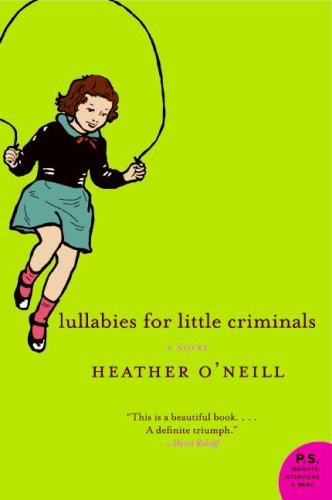
Lullabies for Little Criminals by Heather O'NeillI’ve been hearing about Lullabies for Little Criminals by Heather O’Neill for a few years now in the Canadian Lit scene as it was a finalist for the Governor General’s Award and won the 2007 Canada Reads. When it popped up again in the recent Top 40 Canada Reads books, I decided to go pick up a copy. I’m certainly glad I did.

At 12-years-old, Baby vacillates between childhood comforts and adult temptation: still young enough to drag her dolls around in a vinyl suitcase yet old enough to know more than she should about urban cruelties. Motherless, she lives with her father, Jules, who takes better care of his heroin habit than he does of his daughter. Baby’s gift is a genius for spinning stories and for cherishing the small crumbs of happiness that fall into her lap.

But her blossoming beauty when she turns 13 captures the attention of a charismatic and dangerous local pimp who runs an army of sad, slavishly devoted girls—a volatile situation even the normally oblivious Jules cannot ignore.

You know that nagging feeling you get when you’ve forgotten to finish something, but can’t quite place it? That’s how I felt whenever I wasn’t reading this book. It’s beautifully written, well-told, compelling, and sometimes painful.

Baby, the main character, is so innocent and sweet and you can’t help but love her. Baby’s coming-of-age story is saddening because no one should lose their childhood the way she has. Yet it’s impossible not to fall in love with Baby, her continual optimism and her hope, despite her situation.

Written in first person, the narrative is often poetic as it details life on the streets, drug abuse, crime and poverty, and prostitution. Baby is funny, intelligent, resourceful, quick-witted, but also just wants to have a ‘normal’ life and to be loved. You want to protect her from life in the red light district of Montreal, but it’s nearly impossible.

My only complaint would be the portrayal of Montreal. Heather O’Neill grew up in a rough inner-city neighbourhood in Montreal, and the story takes place in a similar type of neighbourhood in the 1980′s. “The novel isn’t autobiographical, but it does come from things I observed as a kid and what and who I was attracted to as a kid,” O’Neill said in an interview.

But for me, having only visited Montreal once — and not had a particularly wonderful experience — it made me sad that the city was portrayed that rough. I could probably say the same if I read a book placed in Vancouver’s downtown east side, but I just wanted to give Montreal another chance, both in the book and in real life. I do plan to go back to Montreal one day and have a fuller (and better) experience.

I’m going to end my review on a high note by sharing this quote from an interview with Heather O’Neill. She was asked why she chose to write in the first-person from a child’s perspective, and here is her brilliant answer:

“There’s this resilience that kids have….They can stay innocent and keep reinventing themselves despite a lot of appalling stuff. I find the juxtaposition of the innocence of children and the cruelty of the urban world really inspiring. Even when they are in the most horrible of circumstances, their world view is still magical and is informed by talking crocodiles, super heroes and agoraphobic monsters who live in their closets. Kids are all philosophers, processing the world. It also allowed me to describe adults in a different way. The qualities in adults that attract, impress, and disgust children are different than those that their peers notice. So a child’s voice allowed me to create portraits of demimonde characters from a different perspective while shedding of a lot of societal preconceptions.”

  • Listen to rabble.ca’s Prosecast of the first chapter of Lullabies for Little Criminals
  • Quill & Quire Author Profile — Heather O’Neill
  • Winner of Canada Reads 2007 — CBC Book Profile
  • Shortlisted for the Governor General’s Award 2007
  • Shortlisted for the Orange Prize for Fiction 2008
  • Shortlisted for the Amazon.ca/ Books in Canada First Novel Award 2007
  • Shortlisted for the Barnes and Noble Discover Great New Writers Award 2007
  • Shortlisted for the Grand Prix du Livre de Montreal 2007
Bookmark and Share

Category: Books, Reviews | 3 Comments »

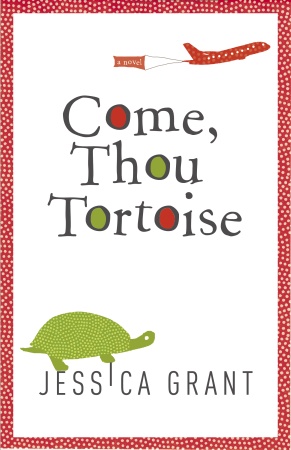
Come, Thou Tortoise by Jessica Grant (book review)

September 5th, 2010 by monnibo

Come, Thou Tortoise by Jessica GrantCome, Thou Tortoise is a heart-warming book with really lovable characters. There was subtle humour with a quiet yet engaging plot. Audrey is brilliant, quaint, silly, admirable, and really just honest-to-goodness good. The book jacket blurb doesn’t do the novel justice and some things I quite disagree with (such as the term”IQ-challenged”). I picked up the book after all the great reviews I read.

A delightfully offbeat story that features an opinionated tortoise and an IQ-challenged narrator who find themselves in the middle of a life-changing mystery.

Audrey (a.k.a. Oddly) Flowers is living quietly in Oregon with Winnifred, her tortoise, when she finds out her dear father has been knocked into a coma back in Newfoundland. Despite her fear of flying, she goes to him, but not before she reluctantly dumps Winnifred with her unreliable friends. Poor Winnifred.

When Audrey disarms an Air Marshal en route to St. John’s we begin to realize there’s something, well, odd about her. And we soon know that Audrey’s quest to discover who her father really was – and reunite with Winnifred – will be an adventure like no other.

Somehow Come, Thou Tortoise is light, quirky, and funny while still being honest, gritty, and real. I don’t think adventure or mystery is quite the right word to describe this book. It is a character-driven story about family, truth, and love. Audrey’s life is turned upside down by the ‘comma’ her father is in and by her Uncle Thoby’s breakdown.

Featuring several flashbacks and retellings, we gain insight into Audrey’s childhood and the truth about her father and Uncle Thoby. She may be strange and have had an unconventional upbringing, but you can see that she was surrounded by love and good people who cared about her.

My favourite part is the tree in her bedroom that Uncle Thoby painted. He added little velcro bits so they could do the changing of the seasons with the various leaves, blossoms, and snowflakes. I also really like the way that Jessica Grant plays with words and makes you feel like part of the family too. I think The Globe and Mail’s review really nailed it on the head:

It might all sound a little madcap, and madcap narratives can be irritatingly self-conscious, shrieking, “Look how wacky I am!” from every page. Not here. Despite all the curiouser-and-curiouser behaviour, it all seems very familiar, and very “real.” Perhaps this is because the reader feels involved, spoken to like a member of the family, or of the community. From the “Northwest Shove” to the Gilbert & Sullivan in-jokes, the reader is included in the tribe.

Jessica Grant’s debut novel is calm and sprawling and very much Oddly. This intelligent, sweet, kind character truly wins you over within the first few pages. It really is a ‘delightfully offbeat story’, and the tortoise is an endearing narrator too!

Bookmark and Share

Category: Books, Reviews | 1 Comment »